Buying
Could the land you buy in Laos hide unexploded ordnance?
Yes, in large parts of Laos the land you buy can still hold unexploded ordnance, and nothing on a land title tells you whether it does. The bombing of 1964 to 1973 left tens of millions of submunitions in the ground, concentrated in the east and the south of the country. For a buyer the practical rule is simple: before you dig on rural land, a foundation, a well, a septic tank, a fishpond, a coffee terrace, find out whether the plot has been surveyed and cleared, by whom, and to what depth. Humanitarian clearance is prioritised for poor villages and their farmland, not for private development, so on a plot you intend to build on the survey and the clearance are usually yours to commission and to pay for. A cleared certificate for farming is not a cleared certificate for building, and the contract should say who carries that cost before you pay.
The subject is back in the news this month. On 7 August the United States announced a further USD 15 million for the HALO Trust's clearance programme in Savannakhet province, which, by the account published in the Vientiane Times, has cleared more than 63 million square metres there since 2012 and destroyed over 145,000 devices. Four days later the National Regulatory Authority for the UXO and mine action sector marked sixteen years of the Convention on Cluster Munitions and repeated the figure that frames everything else: more than 80 million unexploded cluster submunitions still lie in Lao soil. Laos is preparing to preside over the convention's Third Review Conference in September. None of this changes the law on what a foreigner may own. It does change what a careful buyer of land outside the cities should ask.
Why is unexploded ordnance still a property question in Laos?
Between 1964 and 1973 Laos was bombed more heavily, per person, than any country in history: more than half a million bombing missions and over two million tonnes of ordnance. A large share of it was cluster munitions, around 270 million submunitions, the small bombs the Lao call bombies. A significant proportion failed to explode on impact, which is how the national estimate of more than 80 million live submunitions comes about. To that legacy add larger air dropped bombs, mortar rounds, rockets and grenades from the ground war.
Five decades on, this is not a museum subject. Farmers still hit ordnance with a hoe, children still pick up a bombie that looks like a ball, and scrap collectors still cut into casings for the metal. Laos has gone as far as adopting a national Sustainable Development Goal of its own, SDG 18, Lives Safe from UXO, alongside the seventeen global goals. For a property buyer the consequence is narrower but real: on contaminated ground, any work that breaks the soil carries a risk to the people doing it, and the cost and the delay of making the ground safe belong in your budget and your timetable from the first visit, not after the excavator has found something.
Where is the risk, and does it touch the places foreigners buy?
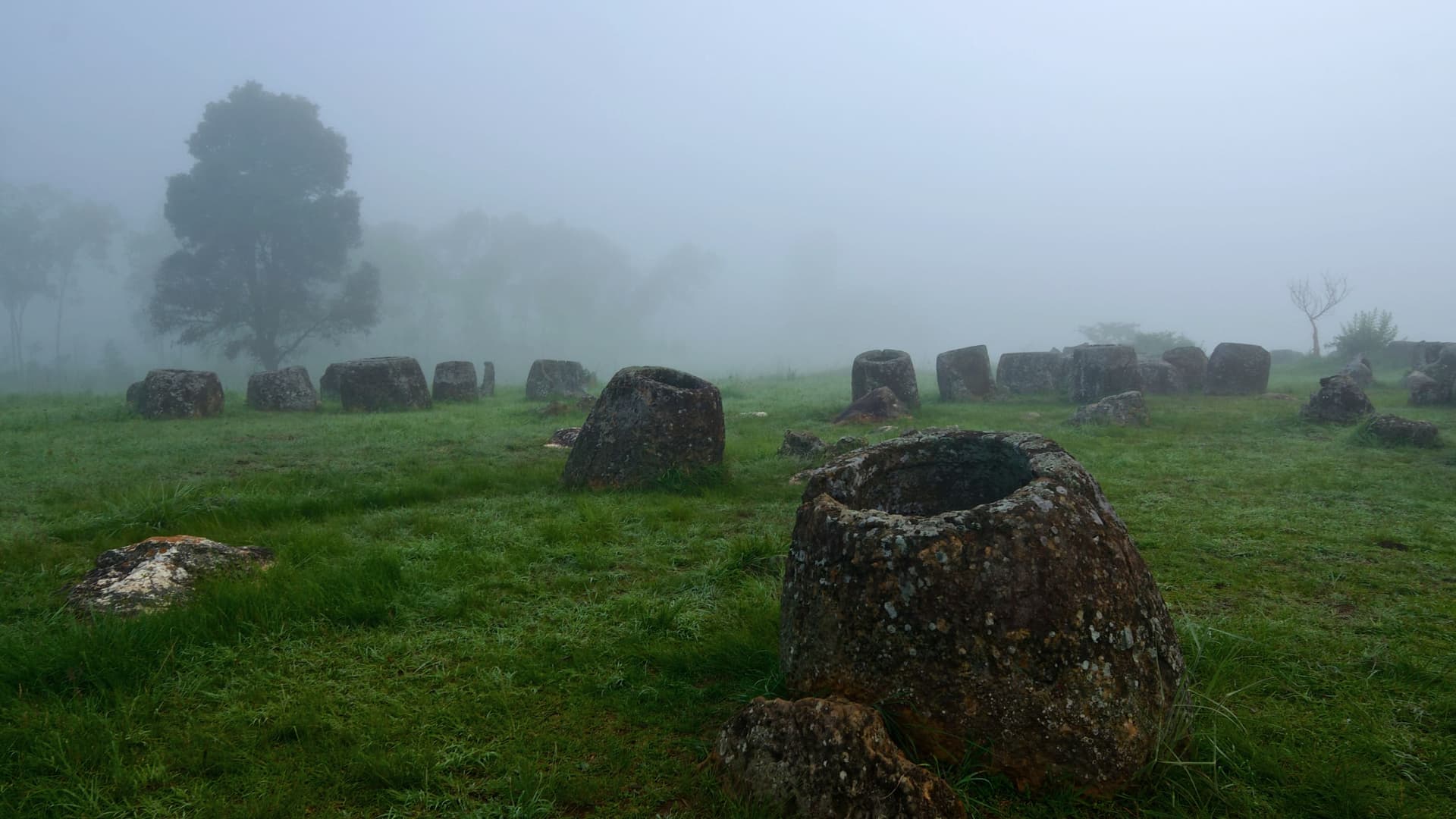
Contamination is uneven. The heaviest is along the former Ho Chi Minh Trail in the east and the south, Savannakhet, Salavan, Sekong, Attapeu, Khammouane and the eastern part of Champasak, and in the north east, Xieng Khouang around the Plain of Jars and Houaphanh. Pockets are found in many other provinces, including Luang Prabang and Vientiane province. The towns where most foreign buyers look, central Vientiane, Luang Prabang town, the Vang Vieng valley floor, sit on ground that is far less affected or has been built over for decades, and a condominium in the capital is not a UXO question in any practical sense.
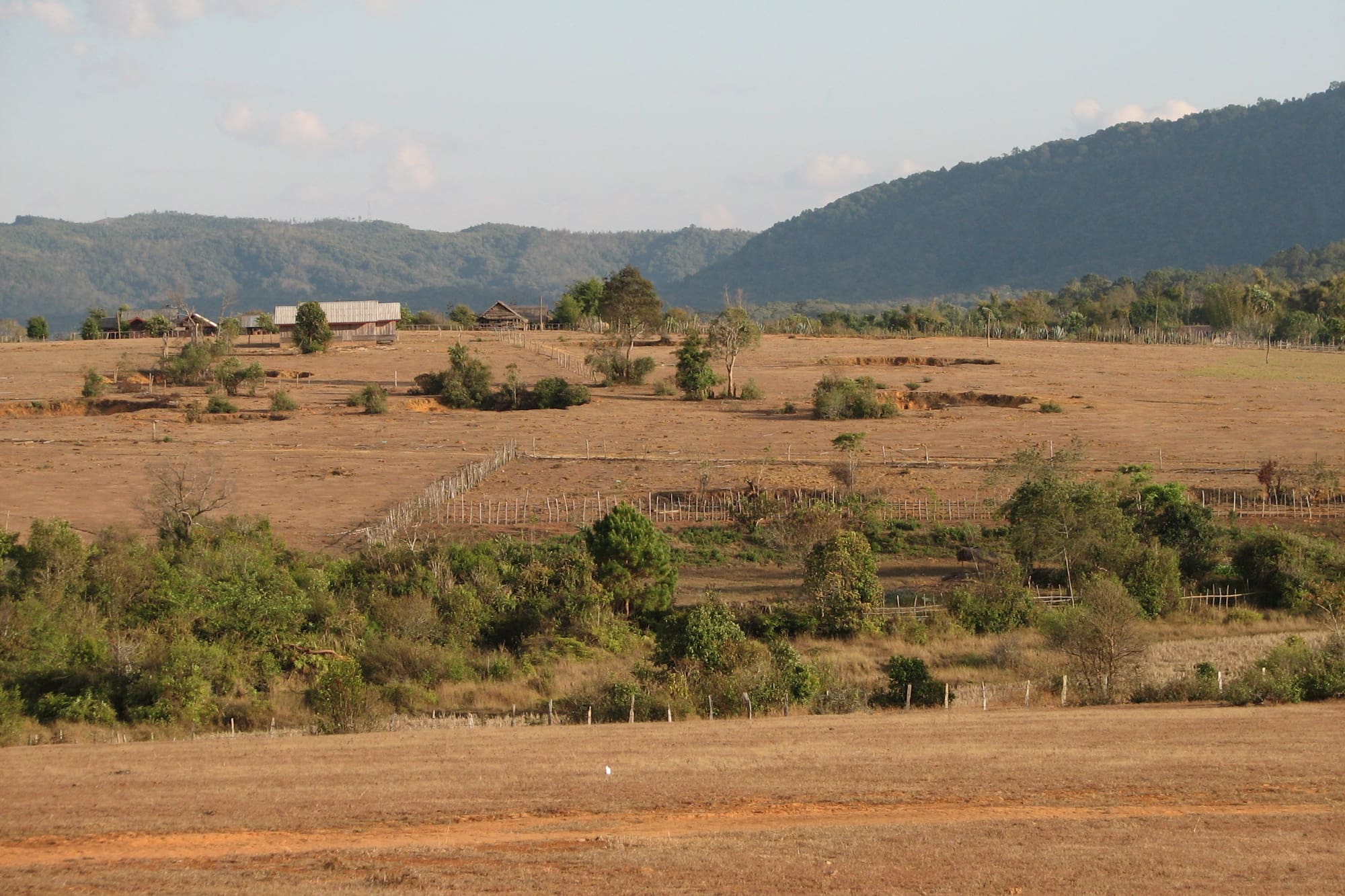
The picture changes as soon as the search moves to land. A coffee or tea estate on the Bolaven Plateau, a riverside lodge site in the south, a farm or a retreat in the hills of Xieng Khouang, a large rural plot bought as a long term hold: these are exactly the purchases where the question has to be asked. It also applies to ground that looks ordinary. Rice paddies that have been worked for decades may have been ploughed only to a shallow depth, and a hillside that has never been cultivated may never have been searched at all.
How can you find out whether a plot has been surveyed or cleared?
There is no box on the title for it. You assemble the answer from four sources, and you should not rely on any one alone.
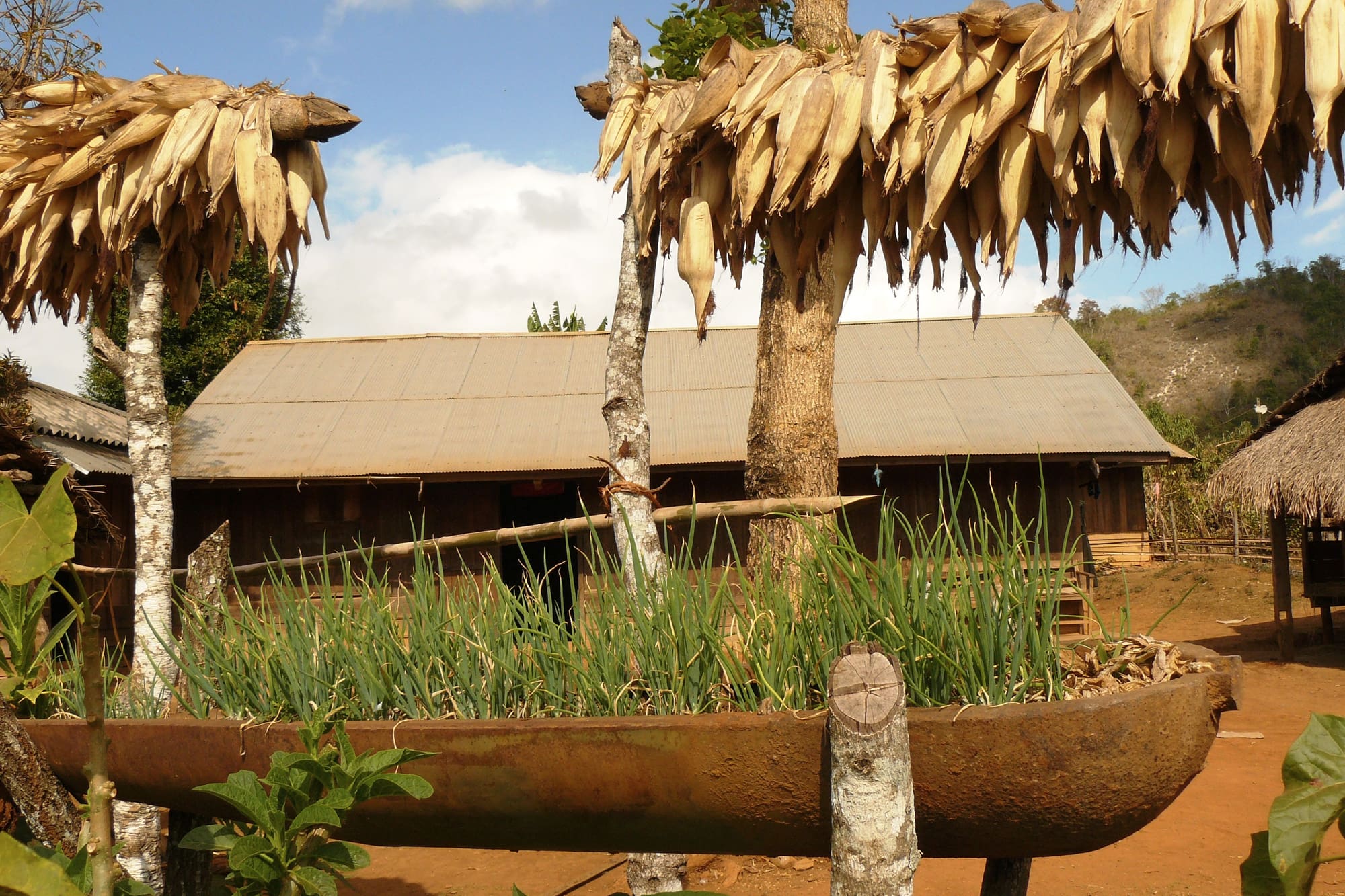
- The village and the neighbours. The village chief and older residents know where bombs fell, where accidents happened and which fields were cleared and when. In contaminated areas, casings reused as planters, fence posts or house stilts, and craters in the fields, are the visible signs that the ground was struck.
- The national records. The National Regulatory Authority keeps the national database of surveyed areas, confirmed hazardous areas and cleared land, built from the work of every accredited operator. Since the mid 2010s Laos has used an evidence based survey that maps confirmed hazardous areas from recorded finds, which makes this record more useful than it once was. Your lawyer or the operator you hire can ask whether the plot falls inside a confirmed hazardous area or carries a clearance record.
- The provincial office and the operators. Each affected province has a provincial UXO office, and the national operator UXO Lao and the international organisations (HALO Trust in Savannakhet, MAG in Xieng Khouang, among others) work by province. They know their ground.
- The seller's papers. A seller who has had land cleared should hold the clearance or handover certificate. Ask for it, read the area and the depth it covers, and check that the boundaries match the plot on the title.
A silence from all four is not a clean bill of health. It may mean only that nobody has looked.
Who clears private land, and who pays?
Humanitarian clearance in Laos is funded by the state and by donors, and it is planned to national priorities: the farmland of poor communities, schools, health posts, water points, roads. A foreign buyer's plot for a house or a lodge is not on that list, and you should not expect a humanitarian team to schedule it. What humanitarian teams do provide, free of charge, is emergency response when an item is found and reported; the new Savannakhet funding alone provides for 700 such callouts.
Planned survey and clearance of land for private development is normally done by a commercial operator accredited by the National Regulatory Authority, under contract and at the landowner's or developer's cost. In Lao practice a development project in a contaminated area is expected to have the ground surveyed and, where needed, cleared before construction begins, and investors in larger projects meet it as a condition of their approvals. How that applies to a single private house depends on the province and the project, so confirm the current requirement with your lawyer and the provincial office rather than assuming either way. Prices depend on the area, the terrain, the vegetation, the depth required and the density of finds, so get a quote on the actual plot. What is constant is the order of events: the survey comes before the purchase price is final, and the clearance comes before the first foundation is dug.
Why is land cleared for farming not cleared for building?
This is the point most buyers miss. Clearance is done to a stated depth, and the depth follows the intended use. Land released for agriculture in Laos is typically searched to a shallow depth, around 25 centimetres in common practice, which is what a plough or a hoe reaches. That is the right standard for a rice field. It is the wrong one for a house.
A foundation, a basement, a well, a septic tank, a swimming pool or a buried water tank goes well below that line, and the larger air dropped bombs could penetrate several metres into soft ground. For construction you need a search to the depth of the works, over the footprint of the buildings and of every trench and pit, and a certificate that states that depth. When you read a clearance certificate, the two numbers that matter are the area and the depth. If the depth was set for farming and you intend to build, treat the plot as not yet cleared for your purpose and budget a further search.
The same logic applies after the purchase. A contractor who extends a terrace, digs a new well or lays a drainage line outside the cleared footprint is working on ground nobody has searched. Keep a plan of what was cleared and to what depth with your title documents, and give it to every builder who works on the land.
What should the purchase contract or the lease say?
On contaminated or uncertain ground, the risk should be allocated on paper before money moves. A Lao lawyer can draft the clauses; what you want them to cover is this:
- A condition before completion. Completion of the purchase, or the start of a land lease, is conditional on a survey by an accredited operator, with the right to withdraw or renegotiate if the plot falls inside a confirmed hazardous area.
- Who pays. Whether clearance is the seller's cost before handover, a deduction from the price, or yours. On a long lease, whether the lessor contributes, and what happens to that cost if the lease ends early.
- The standard. Clearance by an accredited operator, over a defined area, to a defined depth suited to the intended use, evidenced by a certificate delivered to you.
- Finds during works. A stop work and report procedure for your builder, and who bears the delay.
Price is part of the same conversation. A plot that needs clearance before it can be built on is worth less than an identical plot that has been cleared to building depth, and a seller who resists a survey is giving you information. The clearance certificate, once you have it, is also an asset at resale: the next buyer will ask the same question you did.
What do you do if something is found on your land?
Do not touch it, move it, or let anyone else do so, however rusted or harmless it looks. Mark the spot from a distance, keep people and animals away, and report it to the village chief, who will alert the district authorities and the UXO operator working in the area. Emergency disposal teams exist for exactly this, and they do not charge. Stop any work in the immediate area until the team has dealt with the item, and if one item has been found, assume there may be others nearby.
Tell your builder and your caretaker this in advance, in writing, in Lao. On a working plot the person most likely to find something is not you. It is the labourer with the shovel, and the instruction that protects him also protects your project from an accident that no contract can undo.
Does any of this change whether you should buy rural land in Laos?
It changes how, not whether. Large parts of the country have been surveyed and released, more is cleared every year, and families farm, build and live safely on cleared land across the affected provinces. The buyer who asks the question early, budgets for a survey and the right depth of clearance, and writes the allocation into the contract is buying ordinary land with a known history. The buyer who skips it is taking a risk that is not financial alone. On a plot outside the main towns, add the UXO question to the title check, the land category and the flood risk as one of the things you settle before you sign.
This article is general information about unexploded ordnance and land in Laos as at August 2026. It is not legal or safety advice. Survey and clearance requirements, accredited operators and the rules applied to development projects vary by province and change over time. Verify your plot with the National Regulatory Authority or an accredited operator, and your contract with a Lao-licensed law firm, before you commit.