Buying
Keeping a house in Laos you rarely visit
A house in Laos that you use for a few months a year still costs money every week you are away, and it still needs a person. The honest number is not the purchase price and it is not the tax bill. It is the standing cost of holding a building open in a hot, wet climate: someone to watch it, power to keep it dry, a garden that grows back in weeks, a pool that turns green in days, and a repair list that gets longer the longer nobody looks. For a well built villa with a caretaker and a modest garden, that cost is predictable and small against the value of the asset. For a large house shut up and left alone between visits, it is neither predictable nor small, and the bill tends to arrive all at once, as damage.
This became a sharper question in 2026. Official Lao price data for July 2026 put annual inflation at 7.6 percent, with electricity 91.5 percent higher than a year earlier and 27.6 percent higher than the month before. Housing as a category was up 25.7 percent year on year. Every one of those numbers lands on a second home, because much of the power a lightly used house draws is not for your comfort at all. It is for the building: the dehumidifier, the pool pump, the fans and the air conditioning you run to keep damp out of the walls. A carrying cost that looked like a rounding error two years ago is now a line worth budgeting properly.
What actually costs money when nobody is living in the house?
Five things, in roughly this order. First, a person. In Laos the normal arrangement for a house that stands empty is a caretaker, often a couple, sometimes living on the property in a small separate room, who opens windows, runs taps, cuts the grass, deters visitors and calls you when something goes wrong. This is the single most valuable line in the budget and the one buyers most often try to skip.
Second, power. An empty house is not a house with the meter at zero. Fridges, pumps, security lighting, a dehumidifier in a closed room and air conditioning run on a schedule to move air all draw current whether you are there or not.
Third, the garden. Tropical growth is fast and relentless. A garden left for one wet season does not look neglected, it looks abandoned, and clearing it back costs several times what maintaining it would have.
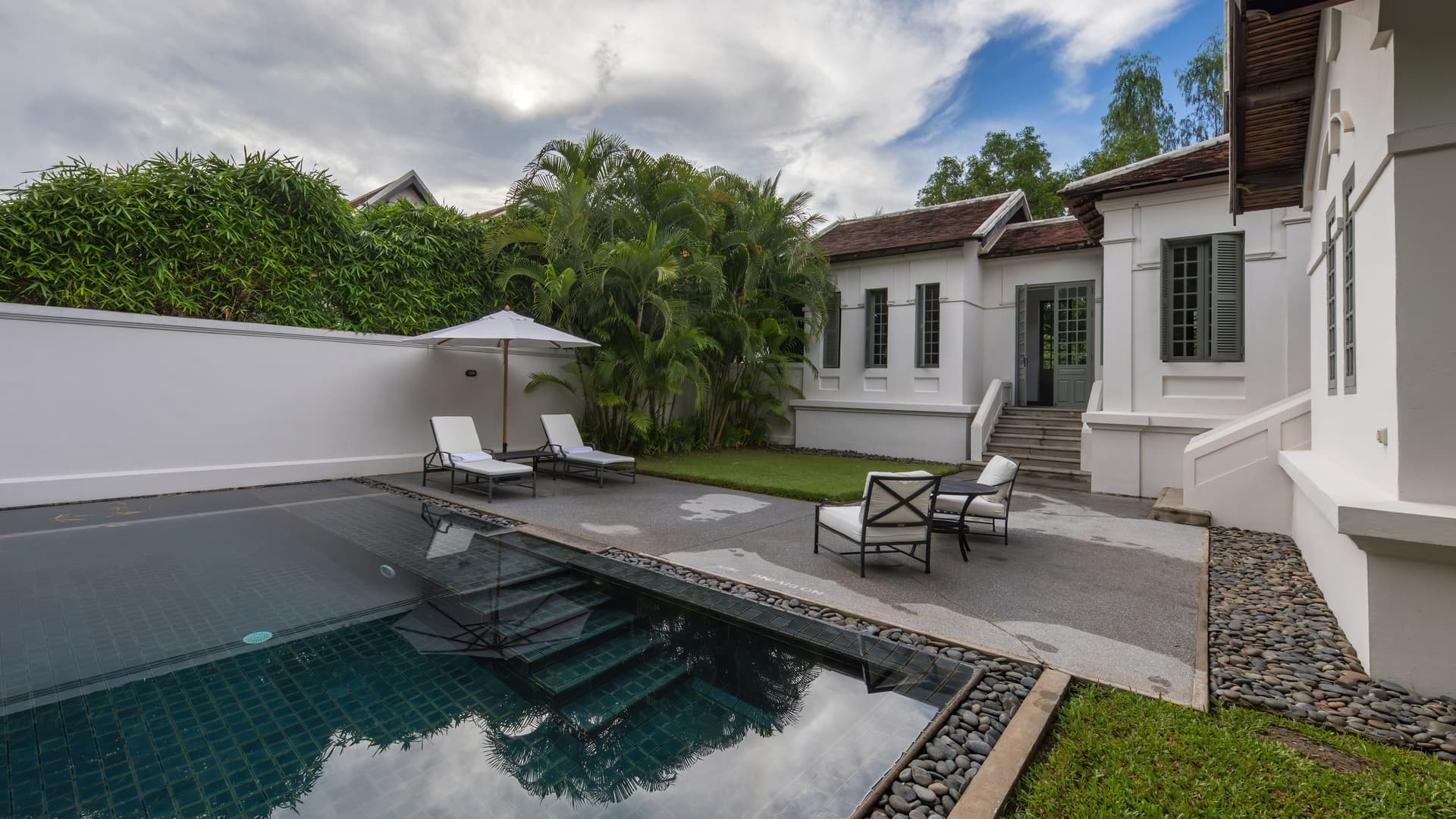
Fourth, water. A pool is a small industrial installation that must be circulated and treated continuously. Left off for a fortnight in the heat it goes green, and recovering it costs chemicals, labour and sometimes a full drain and refill.
Fifth, the repair budget. Not a fixed cost, but the one that decides whether the other four were money well spent. Set aside a yearly amount for what the climate does, and treat an unspent year as a lucky year rather than proof the budget was too big.
Why has holding a house in Laos become more expensive in 2026?
Because the running costs moved, not the property costs. Lao electricity tariffs have been on a multi year adjustment path, and the effect showed clearly in the July 2026 figures cited above. Fuel was around 30 percent higher year on year, which feeds into every trade that has to drive out to your gate: the gardener, the pool service, the plumber, the man with the ladder.
There is a currency layer on top of this. A buyer earning and holding in dollars or baht has seen the kip weaken over several years, which softens the blow considerably, because most of what you are buying here is Lao labour and Lao services priced in kip. But electricity, fuel and imported parts do not soften the same way. The practical read for a foreign owner is that the labour side of holding a house in Laos remains genuinely inexpensive by regional standards, while the energy side no longer is, and the gap between those two is widening.
That has one clean planning consequence. Anything that reduces the energy your empty house needs, shade, cross ventilation, a roof that does not bake, a smaller pool or none at all, is now worth real money every year, not just on the day you are sitting in the room.
What does the climate actually do to a house nobody opens?
The wet season, roughly May to October, is the whole story. Humidity sits high for months, and a closed house with no air movement is a sealed box of warm wet air. What follows is predictable: mould on walls and ceilings, mildew in wardrobes and on leather and fabric, swollen doors that no longer close, books and papers that curl, and a smell that takes weeks to get out.
Termites are the second agent. They are endemic, they work from the ground up and from the inside out, and they are quiet. A timber house or a house with timber floors, doors, stairs or roof structure needs an active treatment regime and an annual inspection, not a one time treatment at handover. Damage found late in a structural member is expensive in a way that no amount of insurance in Laos will comfortably cover.
Then there is everything else that moves in when people move out. Geckos are harmless. Rats, snakes, wasps and bats in a roof void are not, and a house with an open eave and no one walking through it is an invitation. Gutters block with leaves, water backs up under a roof edge, and a small blockage becomes a ceiling stain becomes a rotted batten.
None of this is exotic or unmanageable. It is simply the standing condition of the country, and it is why the caretaker is not a luxury. Nearly every one of these failures is cheap to prevent weekly and expensive to repair annually.
Do you need a caretaker, and what should the arrangement look like?
For a detached house or villa that stands empty for months, yes. The question is not whether but how the arrangement is structured, and this is where foreign owners get it wrong.
Be clear about what the role is. Write down the routine: which days, which rooms opened, taps run, pool checked, garden cut, meter read, photographs sent. A caretaker with a written weekly routine and a monthly photo report is a completely different proposition from a neighbour who has a key and good intentions.
Be clear about who they are. A caretaker introduced by the seller, by a village contact or by someone you have actually met is worth far more than one hired at distance. Ask the village authority who they are. In a Lao village the local administration knows who lives where, and that is a real check available to you.
Be careful about occupancy. Letting a caretaker or their family live on the property is common and usually sensible, because a house with someone in it does not decay the way an empty one does. But make it explicit, in writing, that they occupy as your caretaker and not as a tenant, and never let it drift into an informal tenancy you have not agreed. Who is on your property, and what they do there, is your exposure as owner, which is a subject we treat in full elsewhere.
Pay properly and pay regularly. Lao household wages are modest by regional standards and the difference between paying poorly and paying well is small against the value of the house being watched. The best protection against a caretaker who stops caring is a caretaker who is well treated and expects to be there for years.
Should you close the house down between visits, or keep it running?
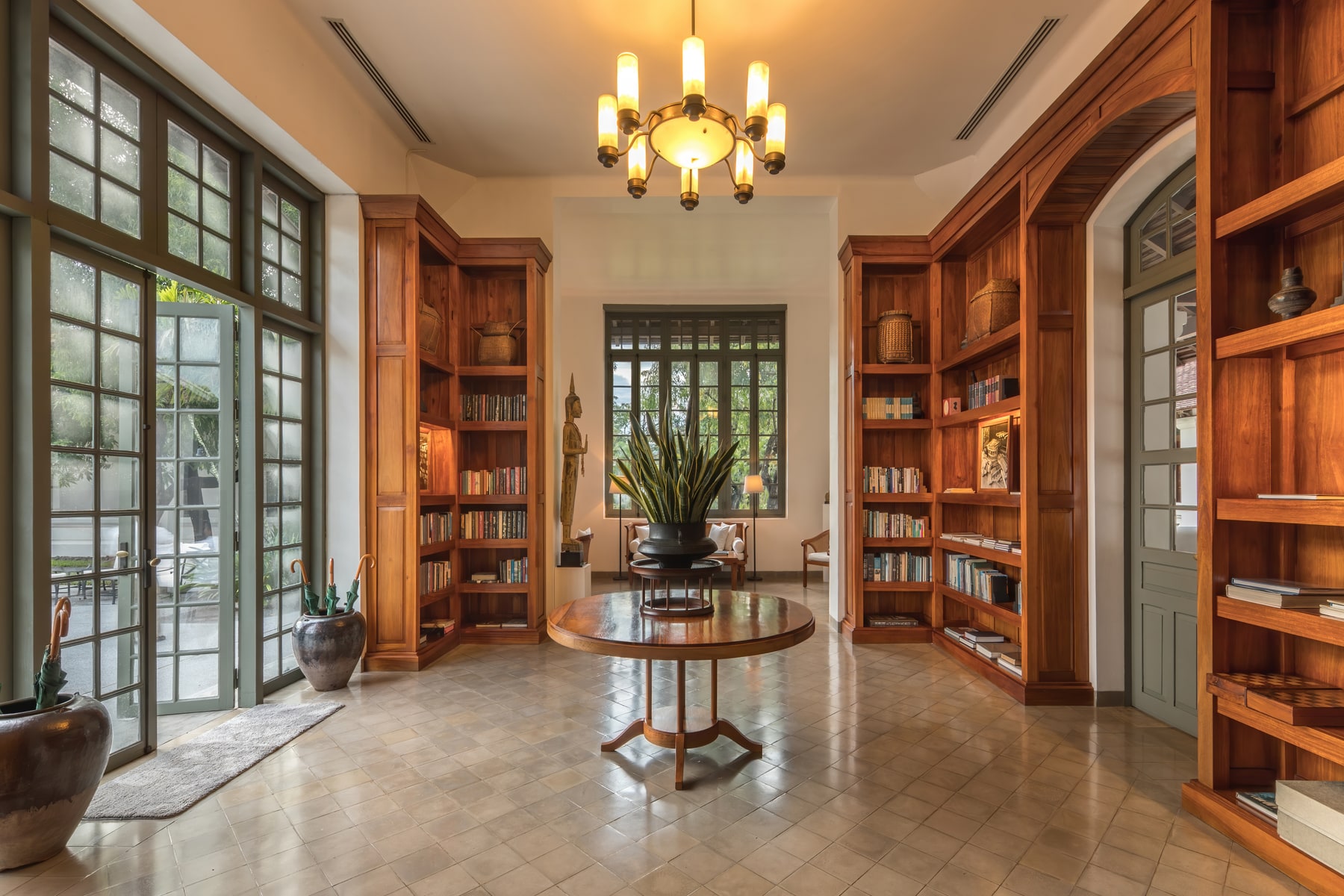
Closing it completely is the instinct, and it is usually the wrong one. A fully shut house in this climate is the exact condition in which mould does its best work. The better approach is to keep the house breathing on a low setting.
That means air moving rather than air conditioning: louvres, security screens or grilles that let you leave windows cracked safely, ceiling fans on low, interior doors and wardrobe doors left open rather than shut. It means keeping the electricity on and the fridge either running or switched off, emptied, cleaned and propped open, never closed and warm. It means running every tap and flushing every trap on the caretaker's weekly round, because a dry trap lets sewer gas and insects straight into the house.
It means soft furnishings, mattresses, leather and anything you care about either taken away or sealed. It means the pool circulating on a timer rather than off. And it means unplugging what does not need to be live, because power surges and lightning are ordinary here and an empty house is a bad place for a fire.
The short version: spend a little electricity to protect the building, and save the rest by not cooling rooms nobody is in.
Is a management company worth it, or is a caretaker enough?
It depends on what kind of property you own. For a villa with land, a caretaker plus a named contractor you trust for repairs is usually the better and cheaper structure. You keep the relationship direct, you pay local rates for local work, and you avoid a layer of margin on every light bulb.
For a condominium unit the calculation reverses. The building already has a management body and a service charge, the common parts are handled for you, and what you actually need is someone to hold a key, air the unit and let a plumber in. That is a small, cheap arrangement, and it is one of the quiet advantages of a registered unit over a house for an owner who is rarely in the country.
Where a management company earns its fee for a house is when you intend to let the property between visits, or when you have no personal network in Laos at all. In that case you are buying introductions and accountability rather than labour. Judge one the way you would judge any Lao service provider: ask for the properties they currently manage, ask to speak to an owner, and read the contract for what happens when they are the ones who fail.
What should you check on every visit?
Arrive with a list, because a house tells you what has been happening if you look in the right places. Walk the roof line and the gutters. Look along the ceilings for stains and along skirtings and door frames for the fine mud tunnels that mean termites. Open every wardrobe and smell it. Run every tap and flush every toilet. Test the electrical trips and the water heater. Walk the boundary and look at the fence, the neighbours' new structures and anything that has been quietly built or planted over your line, because boundary creep is easier to fix in its first year than its fifth.
Then check the paper as well as the building. Confirm the annual land tax has been paid and you hold the receipt. Confirm the electricity and water accounts are current and in the right name. If you hold the property under a lease or through a company, confirm the filings and renewals that structure requires are up to date. A house can be immaculate and the position behind it can still have quietly lapsed while you were away.
How should this change what you buy?
Quite a lot, if you are honest about how often you will really be here. A buyer who will spend three months a year in Laos and nine months elsewhere should weigh maintenance load as heavily as view and price.
In practice that argues for a smaller, better built house over a larger, cheaper one. For masonry and treated timber over untreated timber. For a simple roof over a complicated one. For a garden designed to be low maintenance rather than a lawn that needs cutting every ten days. For a pool only if you will genuinely use it, since it is the single most demanding item on the list. And for a location where competent trades actually exist, which in practice means Vientiane and Luang Prabang far more than a beautiful plot two hours from anyone who can fix a pump.
The buyers who are happiest with a Lao second home some years later are almost always the ones who bought a house they could hold lightly. The ones who struggle bought the dream house and then discovered they had also bought a full time job in a country they visit twice a year.
This article is general information, not legal or tax advice. Costs, tariffs and local practice change, and every property and holding structure is different. Verify your own position with a Lao licensed law firm and a qualified local adviser before you commit.