
Buying
Can you insure a house in Laos?
You can insure a house in Laos, but you must insure it in Laos, and the contract that governs is the Lao one. The insurance law requires a risk situated in Lao PDR to be insured with an insurer registered and operating in Lao PDR, which closes off the workaround most foreign owners reach for first: a Singapore or European policy written over a Vientiane villa. The policy must be in Lao, with any English version an optional addition rather than the instrument. Nothing in the law makes flood uninsurable, but whether a private dwelling can actually buy flood cover is a market question that no public source answers, and the state's disaster insurance, which does exist and does pay, pays the government rather than you. What follows is what is established, what is not, and the six questions worth putting to a licensed broker before you sign anything.
Is any insurance compulsory on a Lao home?
Almost certainly not, if the home is genuinely a home.
The insurance law does carry a compulsory list, and it is long: motor vehicles, hotels, guesthouses, entertainment venues, restaurants, markets, construction sites, warehouses of several kinds, factories, transport of goods and passengers by land, water and air, and fire cover for premises producing or storing explosive substances. Hydroelectric dams were added in the 2019 revision, a direct response to the Attapeu dam collapse the year before.
Read the opening of that list carefully, though, because it is scoped to persons and organisations conducting business activities in the country, and every item in it is a commercial premises or a commercial operation. A privately occupied villa, house or apartment is neither. On the face of the statute, no property insurance is compulsory for a private residence.
Two honest caveats sit under that. The law defers the detail of compulsory insurance to a separate regulation, and we could not locate that regulation, so if a household level fire obligation exists anywhere it would be there. And the word fire appears in the compulsory list on its own, which in context reads as fire cover for the listed commercial premises rather than a standalone national mandate, but the translation is genuinely ambiguous and we will not pretend otherwise.
One more absence is worth recording, because buyers of apartments ask about it. The Decree on Condominiums that took effect in February 2024 is described in detail by three separate law firm analyses, covering the registration of condominium land, developer licensing, the management company, the owners' committee and the mandatory annual meeting. None of the three mentions insuring the building or the common parts, and none mentions a reserve or sinking fund. We did not obtain the decree's full text, so the accurate statement is that the published analyses report no insurance requirement, not that the decree contains none. If you are buying into a building, ask to see the management company's policy rather than assuming the law forced one to exist.
What can you actually buy, and is flood covered?
A home policy exists in the Lao market and it is fire led. The statutory product categories include property insurance as its own head, alongside accident and disaster insurance, which the law defines as covering risks on properties and civil liability. There is no householder or home line in the statutory taxonomy; domestic cover is written under the property head.
What a Lao general insurer's retail home product visibly offers is cover for fire, liability to a neighbour, family liability, theft, water damage, electrical damage and glass breakage. That shape, a fire core with discrete named additions, is consistent with a named perils market rather than an all risks one, though we could not obtain a single policy wording and will not characterise the market on the strength of a marketing page.
On flood, we are going to disappoint you, and the disappointment is the finding. Nothing in the insurance law makes flood uninsurable. Disaster cover on property is an express statutory category, so there is no legal bar. But flood does not appear on the retail product listing we could see, and neither do storm, windstorm, landslide or earthquake. A marketing bullet list is not a policy wording, and absence from one proves nothing about either the exclusions clause or the availability of an extension. Whether flood on a private dwelling in Laos is covered as standard, sold as an optional extension, or simply not underwritten, is a question we could not resolve from any public source. Anyone who tells you the answer confidently is either reading a wording you have not seen or guessing.
One structural feature does deserve a line, because it changes how you shop. The law prohibits an insurer from offering a premium below the rate set in ministry regulation, and its competition provisions bar undercutting the regulated rates. That implies a tariffed market. Shopping hard on price therefore has limited room to run, and the real variation between offers will sit in the wording, the exclusions and the sum insured rather than in the number at the bottom.
Can you insure a Lao house with a foreign insurer?
No, and this is the single most consequential thing in this article.
The insurance law provides that an insurance contract made by an insured in Lao PDR shall be made only with an insurer registered and operating in Lao PDR. A Vientiane law office states the same rule in its own words: property and assets in Lao PDR are to be insured with a Lao licensed insurer. So the intuitive expatriate solution, holding a Singapore, Bangkok or European policy over a Lao house because the local market feels thin, runs directly against the statute.
Two limits on that finding, stated plainly. The provision we read sits in the 2011 insurance law, which the 2019 law replaced, and we could not obtain the current text to confirm the rule survived word for word. It is a structural provision and its retention is likely, but likely is not confirmed. And the consequence for a buyer is unresolved: whether an offshore policy over a Lao risk is void, voidable, or merely a regulatory breach is not stated anywhere we could find, and the prohibition on unauthorised insurance business is aimed at the seller rather than the purchaser. The practical exposure is probably not a fine. It is holding a contract you may be unable to enforce, over an asset in a country where the insurer has no presence and you have no local recourse.
There is a legitimate route by which international capacity does reach your house, and it is worth understanding because it is genuinely reassuring. Lao insurers may reinsure, domestically or overseas, subject to ministry notification and oversight. So a local policy can be, and often will be, standing on an international reinsurance treaty. What you do not get is a direct line to that reinsurer. The law is explicit that a policyholder cannot require the reinsurer to pay them directly. Your counterparty is the Lao insurer and only the Lao insurer, however impressive the paper behind it.
Can a foreigner be the policyholder at all?
On the face of the law, yes, and the statute is unusually direct about it. The insurance law states that it applies to domestic and foreign individuals and organisations alike, expressly including as purchasers of insurance. Its definition of an insured person, an organisation or individual having their property, civil liability or life insured under a contract, carries no nationality qualifier.
The insurable interest question, which is where a foreign owner might expect to be caught, resolves better than you would guess. The law imposes an express insurable interest test only for personal insurance, where you may insure yourself, your spouse, children, parents, siblings, or someone in whom you hold an interest. The property insurance chapter contains no equivalent article. Instead it polices over recovery through indemnity mechanics: indemnity is limited to actual damages and to the sum insured, over insurance refunds the excess premium and caps recovery at market value, and double insurance settles rateably across insurers with total recovery capped at the actual loss.
The practical effect is that the law does not erect a doctrine to trip up a foreign owner. It simply confines you to your real economic loss. Apply that to the three positions a foreigner can actually hold and none of them is a problem in principle. A condominium unit owner owns the unit, and the unit is the insurable subject matter. A lessee of a building on land they cannot own insures the building, the fit out and the contents; land is not an insurable physical asset in any market, so the fact that you cannot hold the title beneath is largely beside the point. A building only owner is in the same position.
What we could not establish is what insurers actually do. Whether they issue in a foreign individual's own name, what proof of interest they demand from a lessee as against a unit owner, and whether any of them push foreign buyers toward a Lao company as policyholder out of underwriting habit rather than law, is undocumented. We found no provision requiring a Lao national's name on the policy, and we also found no evidence about practice. Ask, and get the answer before you pay a premium rather than after a loss.
One adjacent rule constrains who you buy through rather than who may be insured: an individual insurance agent must be a Lao citizen permanently resident in the country. A broker, separately, must carry professional indemnity insurance with a Lao licensed insurer, which is a concrete reason to buy through a licensed broker rather than direct. If you are mis sold, there is something behind the person who sold it to you.
What happens when you claim?
Better than the market's reputation suggests, at least on paper, and the details are worth knowing before you need them.
The notification clock is short and it is the most likely way to lose a good claim. The law requires the purchaser to notify the insurer of damage or loss within five days, and within thirty six hours where the loss is robbery. Contracts may extend those periods, and rights are preserved where a sudden incident or force majeure genuinely prevented notification. Five days is a demanding window for an owner who is not in the country when the water arrives, which is precisely the profile of most readers of this journal. If you hold a Lao property you do not live in, the caretaker arrangement is not only about maintenance. It is about who can raise a claim inside the deadline.
A refusal must be explained in writing. The law lists among the insurer's obligations the duty to provide a written explanation of the reasons for refusing to pay indemnity. That is a concrete, enforceable right and the first thing to demand if a claim is turned down.
A valuation deadlock has a court backed exit. Loss assessment is conducted by the insurer or its authorised person, at the insurer's cost. Where the parties cannot agree on the cause or extent of the loss, they may appoint an independent assessor, and if they cannot even agree on who that should be, either party may ask the People's Court, at the place of the loss or where the insured resides, to appoint one. That assessor's conclusion binds both sides. This is a genuinely useful mechanism and it is much stronger than most buyers assume exists.
Beyond that, the dispute ladder runs from negotiation to mediation, then to administrative resolution by the finance ministry's insurance authority, then to the economic dispute resolution committee, then to the People's Court. Every contract must state which method it uses. The administrative step, a complaint to the regulator, is the cheap first move that almost nobody knows is available, though whether it is used in practice or is a dead letter we could not establish.
Two more mechanics that shape what you get. Depreciation is not indemnified: loss of value through wear is expressly outside cover unless the contract says otherwise. And where the parties cannot agree whether to repair, replace or pay, money applies by default. On timing, the 2011 law gave thirty days from receipt of all required documents where the contract set no period; the 2019 revision is reported to have cut that to fifteen. Note both qualifiers, because they matter more than the number: a contractual period overrides it, and the clock only starts when the insurer accepts it has received everything.

What does the kip do to your sum insured?
This is the question we would put first if we were buying, and it is the one least likely to be raised by the person selling you the policy.
Since 2022 the foreign exchange law has required payments inside Laos for goods, services, debt, dividends and taxes to be made in kip. Insurance premiums and claim settlements are not named expressly in any source we read, so treating a Lao policy as a kip contract is a well founded inference rather than a verified legal fact. Verify it for your own policy.
If it holds, the consequence compounds in a way that is easy to miss. A sum insured fixed in kip is a nominal number. What it has to buy after a fire is cement, steel, wiring, sanitaryware, imported fittings and finishes at the standard a foreign owner actually wants, much of which is priced against a harder currency. Between one renewal and the next, kip depreciation quietly erodes the real rebuilding power of a fixed sum insured.
Now layer the average clause on top. The law settles underinsurance pro rata: if the sum insured is below the property's market value at the time of loss, the payout is reduced in proportion. So a sum insured that was adequate when you set it, left unindexed through a period of depreciation and construction cost inflation, does not simply fall short by the gap. It cuts every partial claim proportionally as well. A kitchen fire in an underinsured house does not pay for a kitchen.
The questions that follow are commercial rather than legal, and a broker can answer them in an afternoon. Can the sum insured be denominated in United States dollars and settled at the kip equivalent on the day? Is index linking available? How does the insurer apply average at claim time after a year of depreciation? We could not answer any of the three from public sources, and for this readership they are the highest value questions in the whole subject.
Does the state not cover flood disasters?
It does carry disaster insurance, it works, it has paid out repeatedly, and it will never pay you a single kip. This is the most commonly misunderstood thing in Lao disaster finance and it is worth being precise about.
Lao PDR joined a regional disaster risk insurance facility, owned by ASEAN and partner states with development bank backing, in 2021. The country's cover is sovereign and parametric: a multi peril policy against flood, tropical cyclone, earthquake, landslide and related perils, carrying a premium in the low millions of United States dollars and providing protection up to the mid teens of millions. What makes it unusual is the trigger. Rather than measuring rainfall or river height, it fires on the annual aggregate number of people reported affected by the national disaster management office, one of the first policies anywhere built that way, and it settles within ten business days.
It has paid. There was a payout after flooding in August 2023, a further payout following Typhoon Yagi in 2024, and another on the first of September 2025 after the disaster management office reported more than three hundred thousand people affected across that season.
Every one of those payments went to the Government of Lao PDR. The policyholder is the state. No individual can claim on it, no homeowner has standing under it, and it is not property indemnity. It is fiscal liquidity so the state can fund a response, and it is not a substitute for a policy on your house. A separate impact based product launched in 2026 targets vulnerable rural households, which is a different scheme with a different purpose and is not aimed at villa owners either. We found no standing state compensation scheme for private property owners. Relief is ad hoc.
The other event readers cite is the Attapeu dam collapse of July 2018, where survivors eventually received something in the order of fifty five million United States dollars in compensation, the bulk of it an insurance payout, alongside relief in kind, under agreements reached in 2020. Two things about it are routinely misread. The process took years, and a state inspection later found a substantial sum of the compensation money had been misused. More importantly for you: that money came from the developer's liability cover. The villagers were third party claimants against somebody else's policy. They were not policyholders. The case tells you a great deal about liability insurance in Laos and nothing whatsoever about whether a household flood policy would respond.
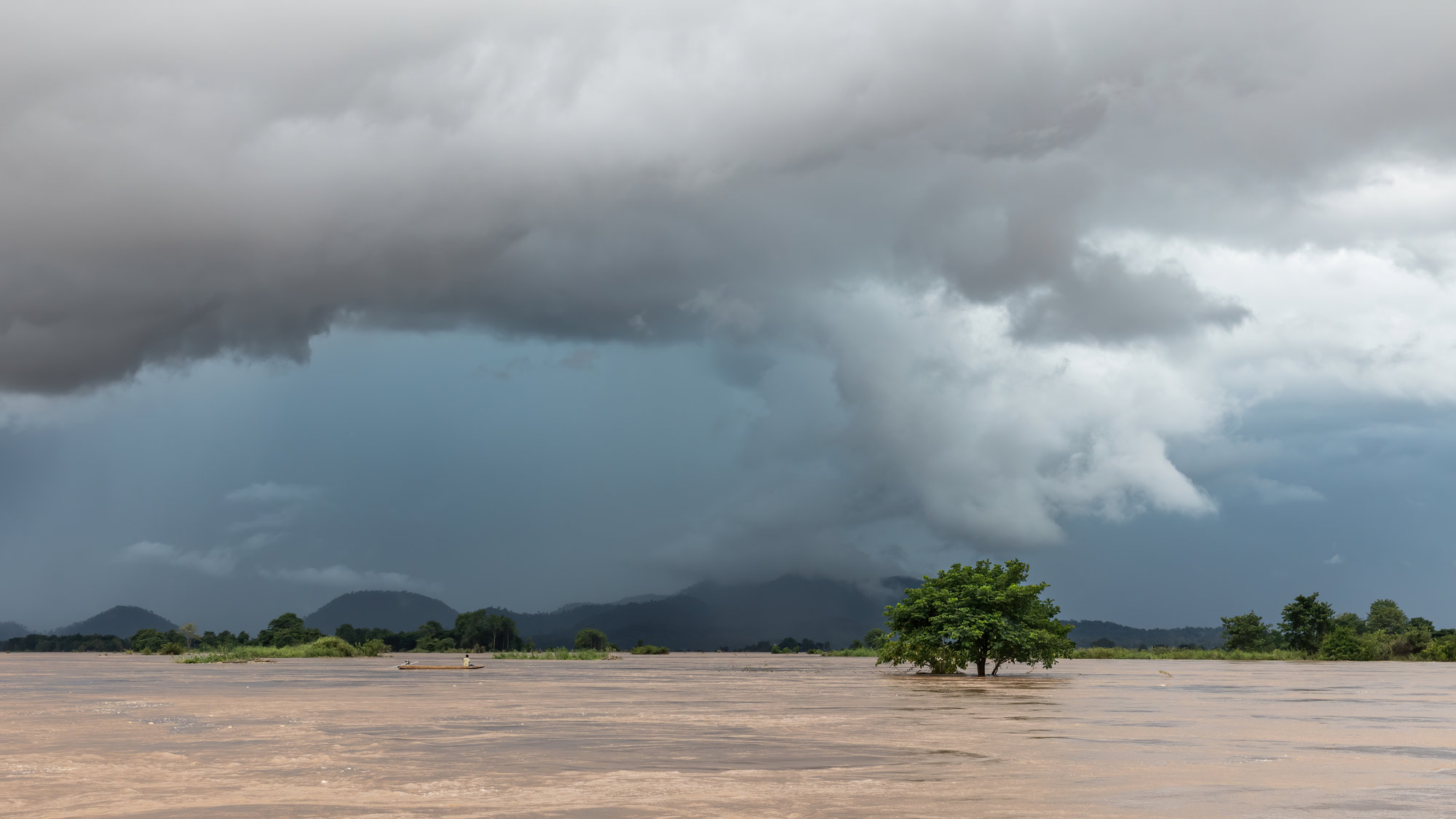
All of which lands where this section began. As of August 2026 the floods are real and current, with more than sixty thousand people affected in Khammouane alone across two hundred and six villages and nearly nine and a half thousand households, preliminary losses put at around a hundred billion kip, and warnings extending across ten provinces. We found no reporting at all of private insurance claims arising from them. That absence is not evidence that policies failed. It is evidence of how few private policies there are to fail.
What should you ask before you sign?
Six questions. Put them to a licensed broker, in writing, and keep the answers.
Is flood covered, excluded, or available as an extension, and where does the wording say so? Not the brochure. The wording. Ask the same question for storm, landslide and earthquake, and ask whether the policy is named perils or all risks.
Will you issue in my own name, and what proof of interest do you need? Ask it as a lessee, a building owner or a unit owner, whichever you are. If the answer steers you toward putting a Lao national or a Lao company on the policy, ask whether that is a legal requirement or a house preference, and get that answer in writing too.
Can the sum insured be denominated in dollars, and is index linking available? Then ask how average will be applied at claim time if the kip has moved.
Which language governs? The policy must be issued in Lao and an English version is an optional addition rather than the instrument. If you are given an English text, ask what happens when it conflicts with the Lao one, and look for a governing language clause rather than assuming.
Who can notify a claim, and by when? Five days is the statutory default and it is short. If you are not resident, name in advance who is authorised to notify on your behalf and make sure they know it.
Are you reinsured, and with whom? You cannot claim against the reinsurer directly, but knowing that the risk sits on an international treaty tells you something real about whether a large loss can be absorbed.
The honest summary is that insurance in Laos is thinner than the risk deserves, better structured in law than its reputation suggests, and almost entirely undocumented in public. That combination rewards the buyer who asks precise questions and keeps the answers, and punishes the one who assumes the policy works the way it would at home.
A note on sources and on what we deliberately left out. The only Lao insurance law available to non Lao readers in English is the 2011 text, which the current law of 2019 replaced. We read the 2011 text in full, and the mechanisms described above come from it, but we could not obtain the current law in any language. For that reason we have not cited a single article number in this piece: quoting provisions from a superseded statute as though they were current would be worse than saying nothing. Treat everything here as the shape of the regime, to be confirmed against the current text by someone who can read it. We have also published no premium figures, no sums insured, no claim settlement statistics and no insurer names or counts, because no reliable public source for any of them exists. The regulator publishes no register of licensed insurers and no complaint or claims data, which is itself explained by the law: insurers have the right to publish their audited accounts rather than the duty to do so.
This article is general information, not legal or insurance advice. Lao law changes, cover turns entirely on the wording of your particular policy, and several of the questions raised here can only be answered by reading a document we have not seen. Verify anything you intend to rely on with a Lao licensed broker and a Lao licensed law firm before you commit funds.