Buying
Will Your Property in Laos Flood?
Will the land you buy in Laos flood? It depends almost entirely on the plot, and a clean title tells you nothing about it. Laos is a monsoon country threaded by the Mekong and its tributaries, and every wet season, roughly May to October, the rivers rise and low-lying riverside land can go under. A verified Land Title protects your legal ownership. It does not raise the ground, give you a dry road in, or make the soil sound enough to build on. Those are physical questions, and they are answered by looking at the land in the wet season, not by reading the paper. The reassuring part is that flood risk, access, and buildability are all checkable before you sign, and for a well-chosen, elevated, properly surveyed plot they shrink to a footnote.
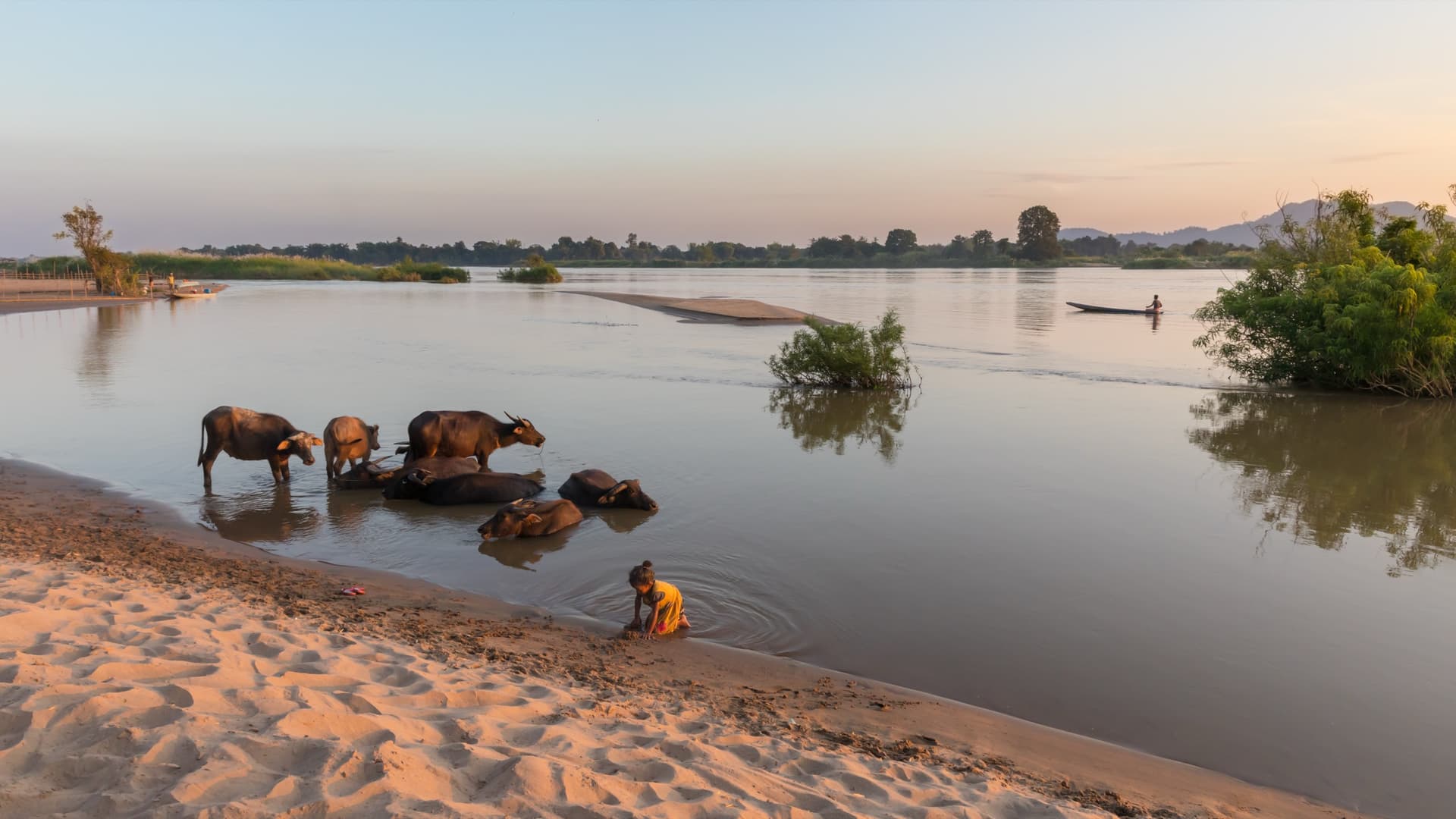
This matters most for exactly the property a foreign buyer dreams of in Laos: a villa with a Mekong view, a plot on the Nam Song at Vang Vieng, a riverside garden in Luang Prabang. Water is the view and the risk in the same frame. In 2026 even the capital took the point seriously, completing a new riverfront embankment and promenade along the Mekong in Vientiane, some nine kilometres of it, built in part as flood defence for the low central districts. If the city invests at that scale to hold the river back, a private buyer on the same floodplain should ask the same question before the purchase, not after.
Why a clean title does not tell you whether the land floods
Title verification, which we cover in detail elsewhere, answers who owns the land, whether the seller can sell it, and whether it carries hidden debts or boundary disputes. It is essential, and it is the first thing to get right. But it is a legal check, and flooding is not a legal fact, it is a physical one. Two neighbouring plots with identical, perfect Land Titles can behave completely differently in August: one sits two metres higher and stays dry, the other is a metre below the wet-season high-water line and floods most years. The register does not record that difference. Only the land does.
This is why physical due diligence sits alongside legal due diligence, not inside it. A check of the title tells you the plot is legally yours. A check of the ground tells you what you actually own: its elevation, how water moves across it, where it drains, and whether it stays dry when the river is at its highest. Buyers who skip the second one are the ones surprised by water in the living room, and by then the title they checked so carefully is no comfort at all.
How do you check flood risk on a plot in Laos?
Start with the calendar. The Lao wet season runs roughly from May to October, and the rivers are highest from about July to September. The single most useful thing you can do is see the plot, or have someone you trust see it, at the peak of the wet season, not only in the clear, low-water dry months when every riverbank looks like a postcard. A plot photographed in February and bought in March can be a different place in August.
Then read the ground and the neighbours. Elevation relative to the river is almost everything: a few metres of height is the difference between a view and a casualty. Look for the marks water leaves, a silt line on walls and fences, debris caught in low branches, a stain on tree trunks, all of which record how high the water reached last year. Ask the neighbours and the village how the plot behaved in the big flood years, because local memory is the closest thing Laos has to a public flood map: detailed official flood-risk maps are generally not available to buyers. Note whether the land is natural high ground or has been raised with fill, and if it is filled, when and how, because fresh fill settles and can flood before it is compacted.
Finally, look at what the plot depends on. Is it protected by an embankment, a dyke, or natural high banks, or is it open floodplain? Does its own drainage have somewhere to go, or does it sit in a bowl that collects run-off from the higher land behind it? Near Vang Vieng, add flash flooding to the picture: the Nam Song and the karst valleys around it can rise fast and hard after heavy rain upstream, a quicker and more violent danger than the slow seasonal swell of the Mekong.
Can you actually reach the plot, all year?
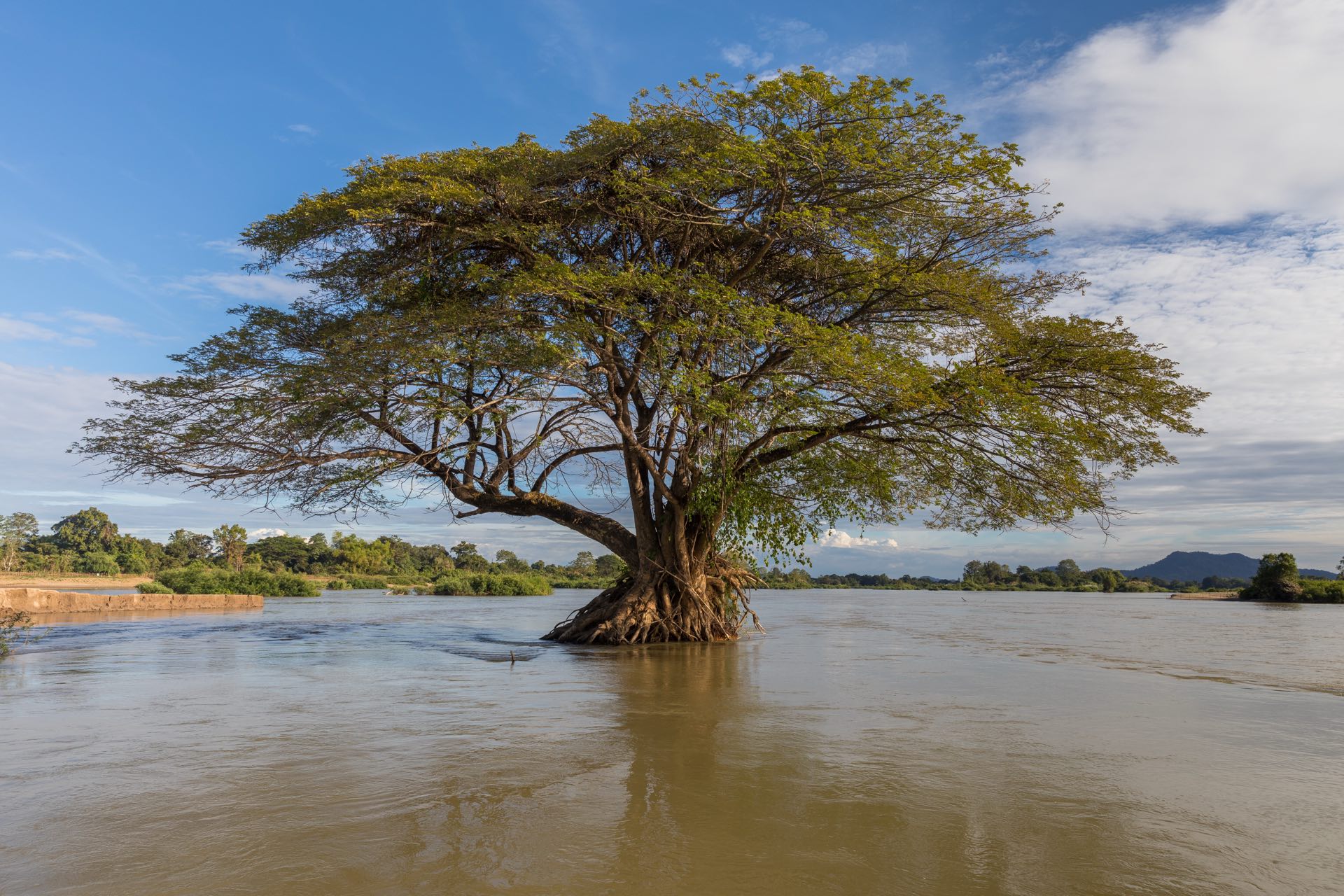
A beautiful plot you cannot legally or physically reach is a trap, and it is one of the most common and most overlooked physical problems in Laos. Two things have to be true. First, you need a legal right of access: a public road that touches your boundary, or a registered right of way across a neighbour's land if your plot is landlocked. An informal understanding that you may drive across a neighbour's field is worth nothing the day that neighbour sells, dies, or falls out with you. If the access crosses someone else's land, it must be a documented easement, verified at the provincial land authority, not a handshake.
Second, the access has to work in the wet season, not just the dry. An unpaved track that is fine in February can turn to impassable mud in August, cutting off a house that is otherwise perfectly dry. Walk or drive the actual route in from the nearest sealed road, ideally in the rains, and ask how it holds up when the weather turns. For a rural or riverside plot, also check the services that follow the road: whether mains electricity and a clean water supply actually reach the boundary, or whether you are quietly signing up to fund the poles, the pipes, and a pump yourself.
Is the ground sound enough to build on?
Clean title, dry land, good access, and you still have one physical question left: can you build what you want here, and what will the ground demand in return? Soil near rivers is often soft alluvial deposit, which can mean deeper and more expensive foundations, ground that has to be raised and compacted first, or a real limit on how heavy a structure the plot will carry. None of this is a reason to walk away, but it is a reason to know the cost before you agree a price, because it lands squarely on your budget.
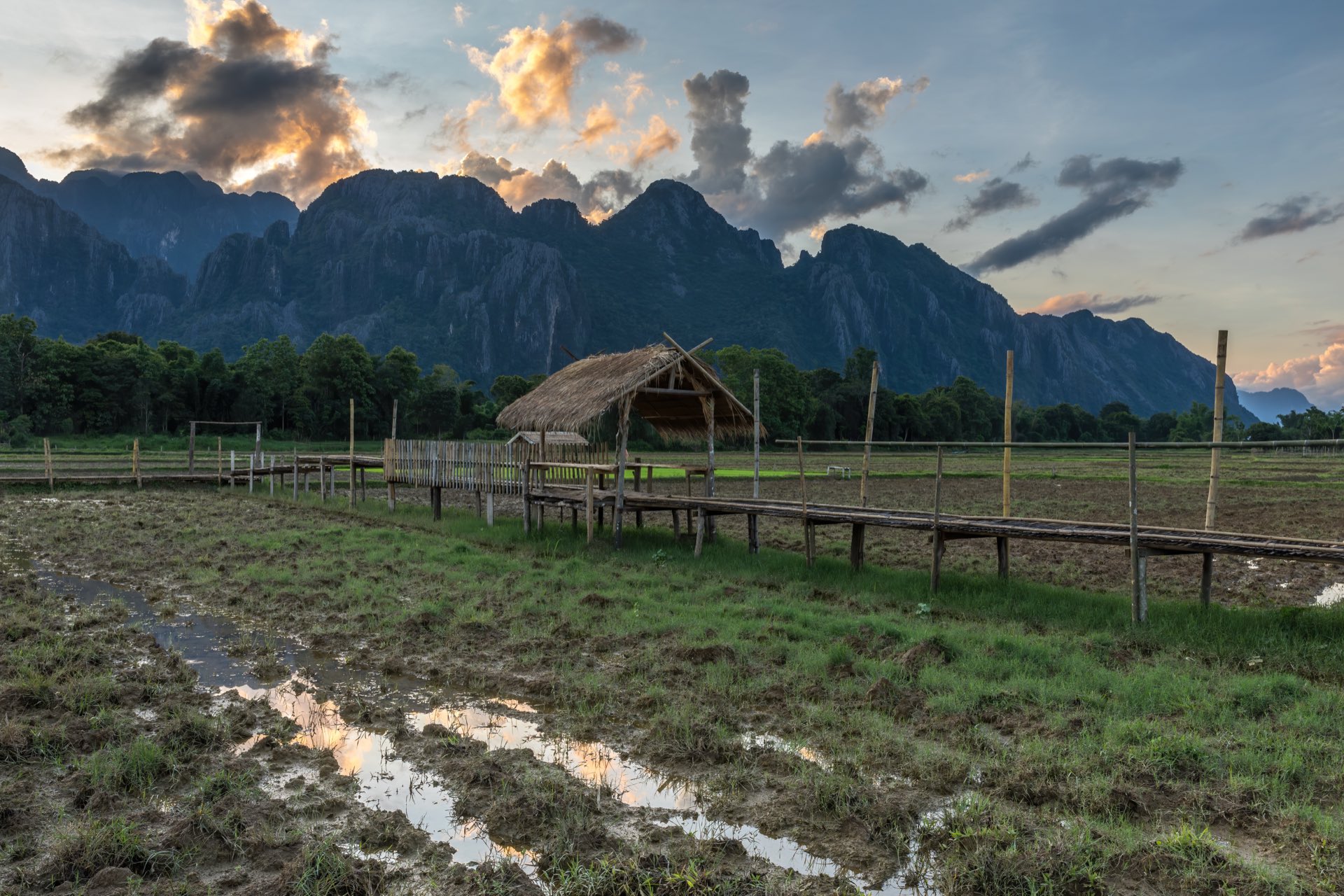
The Vang Vieng valley adds its own signature. This is karst country, limestone riddled with caves, springs, and the occasional sinkhole, and lovely as it is, it means the ground under a plot is not always as solid or as predictable as it looks. A local surveyor and, for anything ambitious, a geotechnical or civil engineer will tell you what lies under the topsoil, how the plot drains, and whether your villa needs an ordinary slab or serious engineering. That advice is cheap next to discovering the answer after the concrete is poured.
Which plots carry the most physical risk, and which the least?
Physical risk in Laos is a gradient, and where a plot sits on it is knowable before you buy. At the high-risk end is cheap, low-lying raw land right on a riverbank or in open floodplain, with informal access and no survey, bought in the dry season on the strength of the view alone. That is the profile that floods, strands, or refuses to hold a foundation, and it is usually the one sold hardest and cheapest.
At the low-risk end is an elevated, titled plot set back from the high-water line, with a legal road to the boundary and a surveyor's report in hand, or, simplest of all, a unit in a properly built and registered condominium, where the flood, access, and structural questions were the developer's to solve and the building either passed or it did not. Most real property sits between those ends, and the whole point of physical due diligence is to find out exactly where on the gradient your specific plot lands, then price and decide accordingly. A river view is worth paying for. A river in your kitchen is not.
The physical checks to make before you sign
Alongside the legal due diligence on the title and the seller, run the plot itself through a short physical checklist:
- See it in the wet season. Visit, or send someone you trust, at the peak of the rains, not only in the dry months.
- Read the water marks. Silt lines, debris, and the village's memory of the big flood years show how high the water has reached.
- Check the elevation. Know how far the plot sits above the wet-season high-water line, and whether the ground is natural or filled.
- Confirm legal access. A public road at the boundary, or a documented, registered right of way, never an informal understanding.
- Test the access in the rains. Make sure the route in stays passable when the tracks turn to mud.
- Verify services reach the boundary. Mains power and clean water to the plot, or a clear, costed plan to bring them.
- Survey the ground. A local surveyor, and an engineer for anything ambitious, on soil, drainage, and foundations, especially on alluvial or karst ground.
Every item on that list is checkable before money changes hands, which is exactly why physical risk should never be the thing that surprises you. A verified title, dry and reachable land, and sound ground are the four legs the same purchase stands on. Get all four, and the Mekong stays a view.
This article is general information about the physical due diligence involved in buying land in Laos, not legal, engineering, or flood-risk advice, and not a comment on any specific plot. Flood behaviour, access rights, and ground conditions vary from parcel to parcel, and detailed official maps are often not available, so verify anything specific to a property on the ground, with the provincial land authority, a qualified local surveyor or engineer, and a Lao-licensed firm, before you rely on it.