
Market
Does the China-Laos Railway make Laos worth buying into?
Does the China-Laos Railway make Laos worth buying into? It makes the question worth asking, which is not quite the same thing. The railway is real, it has reset travel times along the whole spine of the country, and it is drawing visitors and investors who were not coming before. But a faster train does not verify a title, does not create a price index where none exists, and does not turn a thin market into a liquid one. Treat the line as a reason to look more closely, not as a reason to buy in a hurry.
A word on what follows. This is general market commentary, not investment advice and not a forecast of returns. Laos has no published property price index, so when you read that prices along the corridor are climbing by a neat figure, treat the number as marketing until someone shows you the transactions behind it. What we can speak to with confidence is connection, demand, and where the change is structural rather than seasonal.
What did the railway actually change?
The Boten to Vientiane line opened at the end of 2021, and what it changed first was distance measured in hours rather than kilometres. The trip from the capital to the Chinese border that used to swallow the better part of a day on a winding road is now well under four hours. Vientiane to Luang Prabang, once an exhausting mountain drive, is a comfortable morning. Vang Vieng sits about an hour from the capital. None of the towns moved, but every one of them became closer to every other, and closer to China, which is the largest single source of visitors and capital in the region. Freight moves on the same line, quietly knitting the country into a supply chain that runs north into China and south toward Thailand. Connection of that kind does not fade with the season. It is the sort of structural shift that slowly resets what land near a station, or with an open view, is worth.
Where does the line actually stop?
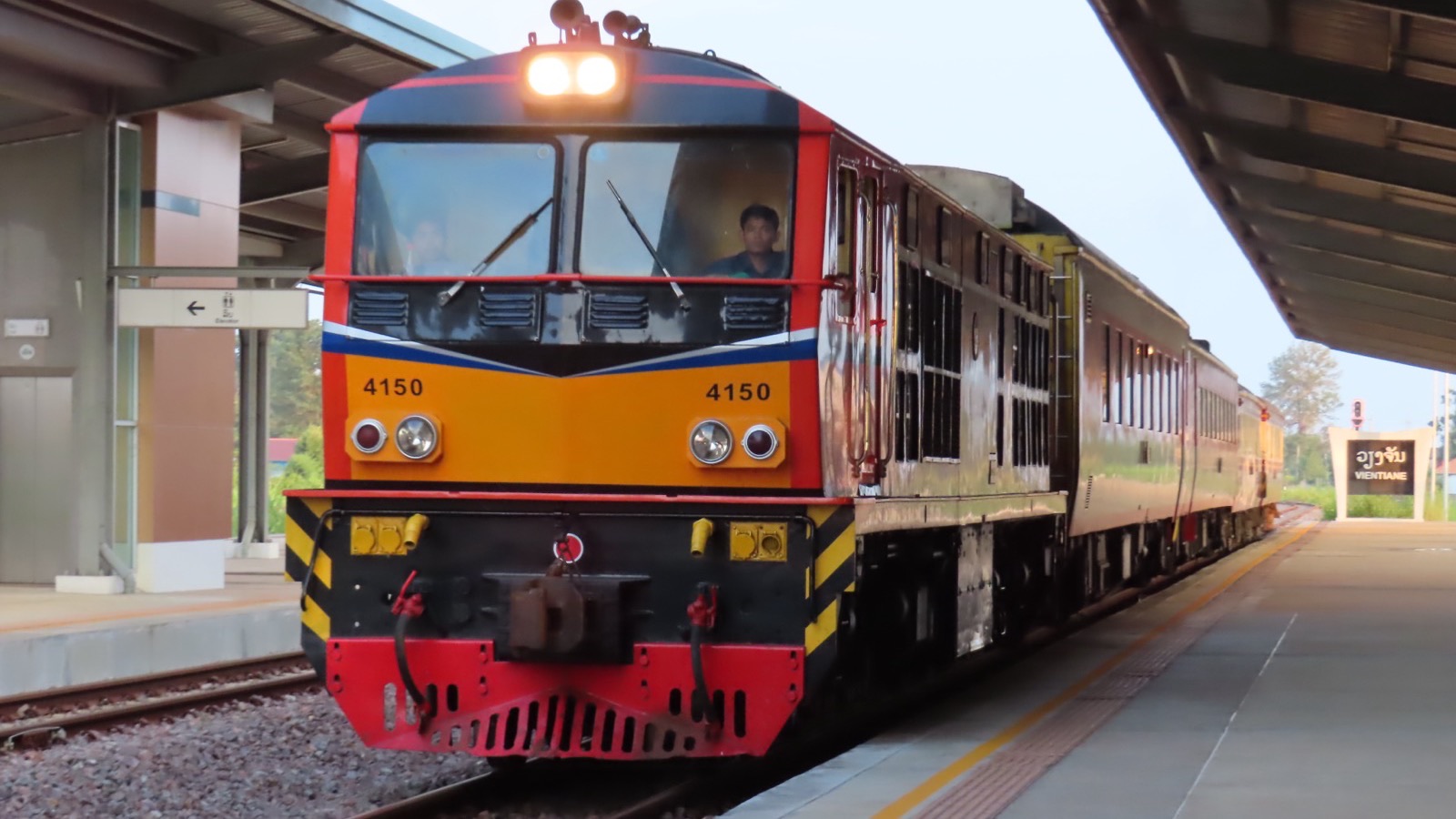
The corridor is not one place, it is a string of very different ones, and the station map is the first thing to understand. Running north to south, the passenger stops that matter are Boten on the Chinese border, then Luang Namtha and Oudomxay in the far north, then Luang Prabang, Vang Vieng, and Vientiane. Each is a different proposition. Boten is a border special economic zone being built largely from scratch. The northern towns are frontier markets with thin infrastructure and few foreign buyers. Luang Prabang is a protected UNESCO city where supply is deliberately constrained. Vang Vieng is a young, scenery-driven market. Vientiane is the capital and the most practical entry point of all. The railway connects them on a single timetable, but it does not make them interchangeable, and the differences between them matter far more to your money than the thing they share.
Is the railway premium real, or just a story?
Here is where discipline earns its keep. The honest position is that the demand effect is visible and the price effect is not measured. Tourism is up sharply since the line opened, Chinese arrivals in particular, and more visitors staying longer is a genuine driver of rental demand and, over time, of land values near the things people travel to see. That much is sound. What is not sound is the precise percentage. With no official price index and few public comparable sales, any figure you are quoted for corridor appreciation is somebody's estimate dressed as a fact. Some of it is real, some of it is a seller's hope, and near the stations you will also find speculative froth: plots priced for a future that may take a decade, sold on the strength of the train alone. The test we apply is simple. A good asset on this line should make sense without the railway as well as with it. If the only argument for a plot is the station, the price is borrowing from a future nobody can date.
Which stop suits which buyer?
If the corridor is on your map, match the stop to what you actually want, not to the loudest headline. Vientiane is the practical choice: the best-connected city, the deepest pool of services and tenants, and the one place where owning a condominium in your own name, possible for foreigners since 2024, is most available. Luang Prabang is for the buyer who prizes a protected heritage townscape and a slow daily rhythm above all, and where the very rules that keep it beautiful also keep supply scarce. Vang Vieng is the early, scenery-driven market, higher potential and higher risk, suited to a multi-year horizon rather than a quick flip. The far northern stops, Oudomxay, Luang Namtha and Boten, are frontier territory: cheaper, far less liquid, and best left to investors who understand they are buying a thesis, not a finished town. We cover Vientiane, Vang Vieng and Luang Prabang in their own guides, and reading those before you commit will tell you more than any corridor-wide number ever could.

Will the railway make a property easier to sell later?
This is the question that should sit underneath all the others, because connection cuts both ways. The same line that brings buyers to your door also widens the pool of people who might one day take the property off your hands, and that is a real, if gradual, improvement in liquidity for the stronger towns on the route. But do not overstate it. Laos remains a cash market with few buyers for any given home, the railway has not changed that, and a station nearby helps far more with a well-located condominium in Vientiane than with a remote plot in the north that still has no obvious second owner. Connection improves the odds of a clean exit. It does not guarantee one, and it never sets your timetable for you.
What the railway does not change
For all it has moved, the railway changes nothing about the rules that protect your money, and that is the part newcomers most often forget. A foreigner still cannot own land outright anywhere along the line. Your security still comes from the structure, a condominium unit in your own name or a registered long lease, and from the document, a verified, registered Land Title rather than a weaker certificate or a village paper. The market is still young and thinly traded, so the right buyer for a special property can take time to appear, and a quick exit is not something to count on. The due diligence that protects you in Vientiane is exactly the due diligence that protects you in Oudomxay. A train near the plot is a convenience, not a substitute for a clean title, a confirmed seller, and a price that holds up on its own.
How Prime Mekong reads the corridor
We treat the railway as context, not as a sales pitch. It tells us where attention, visitors and capital are flowing, which is useful, but it does not tell us which individual plot has a clean title, an open view that will stay open, and a price grounded in the market rather than in a story about the train. Those answers come from being on the ground, and they are the whole of our work. We will show you the quiet listings as readily as the obvious ones, verify every title before you commit, and say plainly when a property is priced on the railway rather than on its merits. The line is a real, long-term tailwind for Laos. It is also the easiest thing in the country to overpay for.
If the corridor interests you, start with the city, not the train. Tell us how you want to live or invest, and we will tell you honestly which stop, if any, fits.
This article is general market commentary, accurate to the best of our knowledge in 2026, and is not investment or legal advice. Property values can fall as well as rise. Verify the specifics with a Lao-licensed firm before any transaction.