Buying
How much cash can you bring into Laos?
You can carry up to about ten thousand US dollars in or out of Laos without special approval, and more only if you declare it and clear it with the central bank. That is the rule a recent Bank of the Lao PDR decision settled. But the real answer for a property buyer is simpler: cash is for living, not for buying. Money you carry in by hand leaves no banking record, and without that record you cannot prove it entered the country, which is exactly what you need in order to take the proceeds home when you sell. Wire the purchase. Carry only what you will spend.
How much cash can you legally carry in or out?
The headline figure is around ten thousand US dollars, or the equivalent in any currency, per person. Below that, you may carry cash in or out of Laos without seeking approval. Above it, you must declare the amount and obtain clearance from the central bank's foreign-exchange authority, and you should expect to show where the money came from. A Bank of the Lao PDR decision in early 2026 set the threshold at this level, replacing a lower local-currency figure, so the rule is both recent and specific. Treat the number as a ceiling on convenience, not a target. Carrying close to it invites scrutiny you do not need, and rules like this are revised, so confirm the current figure before you travel rather than trusting a number you read months ago.
The threshold covers any currency, not only dollars, counted at its equivalent value, and it applies per person rather than per family, so a couple cannot simply split a large sum to slip under it twice. Kip itself is treated more strictly than foreign currency, since the central bank discourages large amounts of the national currency from leaving the country at all. The purpose of the rule is not to trap travellers but to give the authorities sight of large cross-border flows, the same reason every country has a declaration line. For an ordinary buyer arriving with a few thousand dollars for setup costs, it is a non-event. It only bites when someone tries to move a purchase-sized sum in a bag.
Why is carrying cash the wrong way to fund a purchase?
Because the law that lets you take money out of Laos again hangs entirely on a banking record that hand-carried cash never creates. When you wire funds in through the formal channel, your bank documents the inflow, and that paper trail, the Capital Importation Certificate and the bank's own records, is what entitles you to repatriate the proceeds when you sell. Cash carried through the airport in a suitcase generates no such record. It may buy the property, but it strands the value inside the country: years later, when you want your money home, you will have nothing to show that it ever came in. A foreigner who funds a purchase in cash has, in effect, bought a one-way ticket for their own capital. We set out the formal route in detail in our guide to getting your money in and out of Laos, and the choice of bank in our guide to choosing a Lao bank.
Picture the buyer who pays for a villa with cash brought in over several trips, pleased to have avoided bank fees and questions. The home is theirs, and the years pass happily. Then they decide to sell and move on, and the proceeds run into the first question every bank asks: how did the original money enter Laos? With no certificate and no inflow record, the honest answer is that, on paper, it never did. The sale can still happen, but moving the money out becomes a slow, uncertain, and sometimes impossible exercise. The fees saved at the start are dwarfed by the value now trapped. This is why we treat the funding method as part of the purchase decision, not a detail to sort out later.

So what should you actually use cash for?
Cash has an honest, useful role: it is for the costs of living and settling in, not for the asset itself. The deposit on a rental while you search, the furniture and fit-out of a new home, a vehicle, the daily expenses of the months before your local accounts and cards are working smoothly, all of this is reasonable to cover with money you bring or withdraw locally. Keep the amounts sensible and matched to real near-term spending. There is no advantage, and real downside, in warehousing a large cash balance in a drawer or an idle account. It earns nothing, it is exposed to loss and theft, and if it is undeclared it can become a problem at the border on the way out. Cash is a tool for the weeks in front of you, not a vault for the years ahead.
What happens at the airport or the border?
Lao customs, like customs everywhere, expects honesty about what you are carrying. If you are over the declarable threshold, declare it, on the form and to the officer, and keep proof of where the money came from, a bank withdrawal slip or a statement. Declaring is not an admission of wrongdoing; it is the thing that keeps legitimate money legitimate. Undeclared cash above the limit is what creates trouble: at best delay and questions, at worst seizure and a penalty. The land border crossings and the international airports apply the same logic, so do not assume a quiet land crossing is exempt. None of this is unusual or unique to Laos. It is the ordinary discipline of moving money across any frontier, and the travellers who never have a problem are simply the ones who declare and document.
Kip or dollars: which cash should you hold?
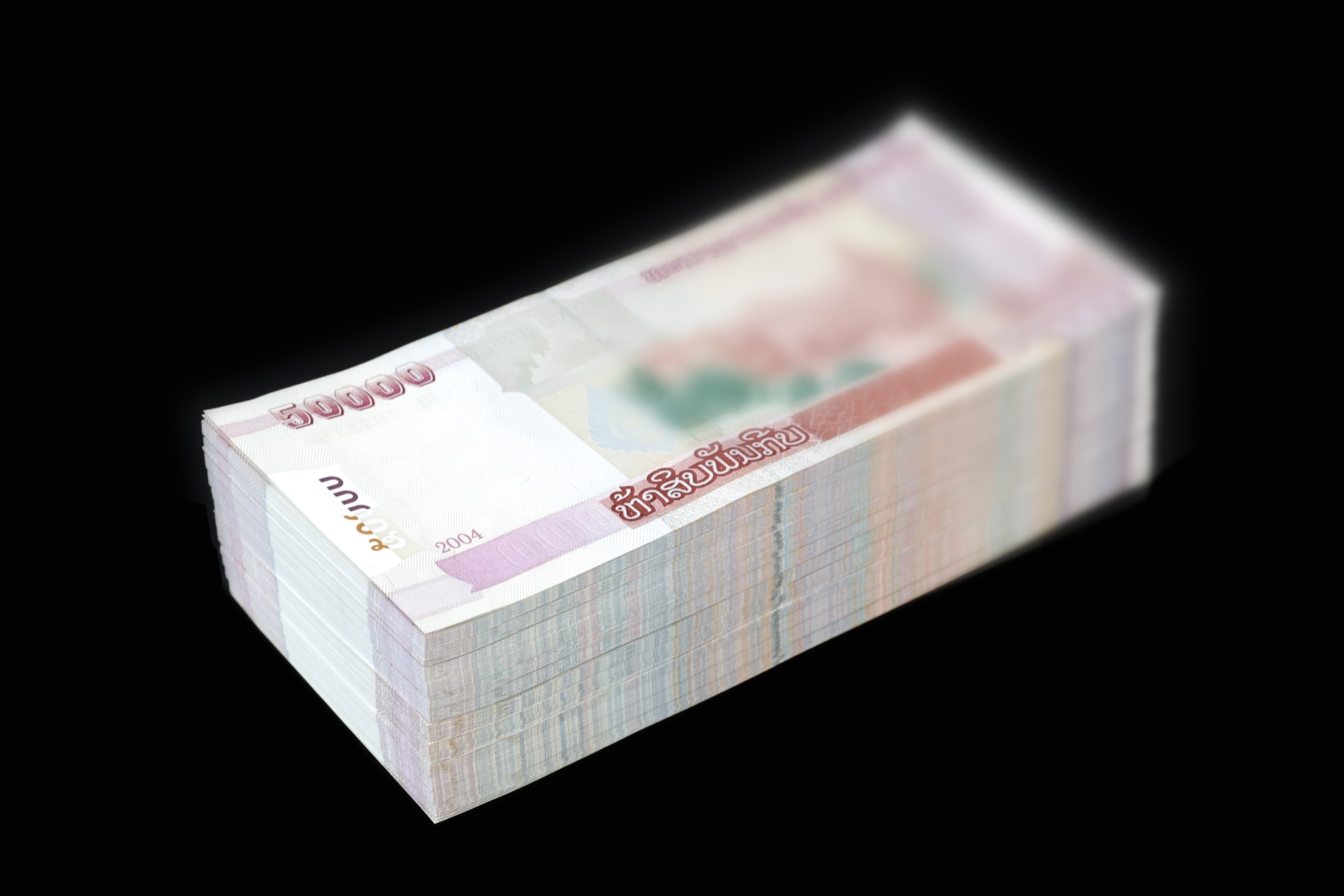
In practice US dollars are widely recognised and easily exchanged in Laos, while the kip is what you spend day to day, and official payments must be settled in kip. Two cautions follow. First, do not hold a large balance in kip cash. The currency has weakened over recent years, even after its recent steadying, so a fat kip float quietly loses value while a dollar one does not. Convert as you need to spend, not in advance. Second, foreign-exchange rules in Laos have tightened, with the central bank channelling conversion through the banking system, so the casual street-changer route is narrower than it once was. Change money through your bank or a licensed dealer, keep the receipts, and you keep both the rate and the record. The receipt that feels like a formality today is the proof you may be glad of later.
So what is the safe way to handle your money?
The discipline is short, and it mirrors everything else we say about money in Laos. Wire the purchase price in through the formal banking channel, so it is documented and one day repatriable. Carry, or withdraw locally, only the cash you will actually spend on living and settling in, and keep it modest. Stay under the declarable threshold unless you are willing to declare and document, and when you are over it, declare it plainly. Hold spending money in kip and the rest in a sound account, converting as you go. Treat cash the way you treat the title and the bank: as something to handle deliberately, with a record, never on trust. The point, as ever, is that the money you bring to Laos should be as easy to take home as it was to bring.
This article is general information, not legal, tax, or financial advice. Lao currency, customs, and cash-declaration rules change and are applied case by case, and the figures here can be revised. Before you travel with money or fund a purchase, confirm the current thresholds and procedure with a Lao-licensed bank, a lawyer, and Lao customs.